

 Agriculture
  Automotive
  Building & Construction
  Electrical & Electronics
  Home, Sport & Leisure
  Packaging
  Textile & Fibers


Expanding the Recycling Stream for Multilayer Barrier Packaging
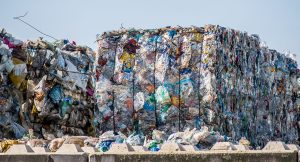
Millions of tons of multilayer barrier packaging are collected across Europe every year. Much of it could, in theory, be recycled. In practice, most of it never becomes usable material again. The reason isn’t a lack of supply. It’s incompatibility.
That gap is exactly what grafted polymer addresses, and it’s why they’re becoming central to meeting recycled-content targets.
The Real Problem Isn’t Supply
Recycled-content targets keep rising, and brands need to show measurable progress. But converters and film producers need material that performs on their lines, not just material that checks a procurement box. Some of the most available and affordable recycled film streams sit unused, not for lack of value, but because they’re hard to process. Multilayer barrier packaging is a clear example, and understanding why is increasingly relevant across the flexible packaging chain.
Why Barrier Films Break Down in Recycling
Food packaging often uses a PA (polyamide) or EVOH (ethylene vinyl alcohol) barrier layer, bonded to PE or PP with tie-layer adhesives, to block oxygen and extend shelf life. That structure breaks down once the film is reground and remelted: PA and EVOH are chemically incompatible with PE and PP, so instead of blending, they phase-separate, producing:
- Holes and weak point,
- Poor surface appearance
- Unstable, inconsistent processing on the line
These defects determine whether the material can be used at all. A grafted polymer addresses this directly: it stabilizes the interface between the incompatible polymers during reprocessing, so the melt holds together instead of separating. Once phase separation is under control, barrier film streams open up to:
- Bag-in-box films – PA-containing scrap becomes a consistent recycled granulate
- Industrial and agricultural covers – pallet covers and ag films don’t require virgin-grade quality, making them a natural fit
- FFS packaging – some streams can meet the sealing and mechanical requirements of form-fill-seal applications
- Internal production scrap – trim and off-spec rolls shift from a disposal cost to a recoverable input
For example, a barrier film producer generating PA-containing production scrap would normally export it at low value, store it, or landfill it, because phase separation makes it too unpredictable to reprocess. Adding a grafted polymer compatibilizer during regranulation turns that same scrap into a stable granulate suitable for agricultural film or pallet covers.
How Grafted Polymer Compatibilizers Work
Unlike the tie-layer adhesive in the original film, which bonds distinct layers during co-extrusion, a compatibilizer added during reprocessing stabilizes the interface between incompatible polymer domains within the mixed melt.
This happens through reactive extrusion: a chemical reaction during extrusion produces a modified polymer with functional groups attached to its backbone. Those groups interact with both the polyolefin matrix and the PA or EVOH domains, acting as a molecular bridge.
Done well, this produces more uniform melt behavior, fewer visible defects, better mechanical performance, and a broader range of applications the recycled material can serve.
Closing the Gap: Formulation and Tosaf’s Approach
Polymer composition, processing method, melt flow, mechanical targets, odor control, and cost all interact differently from stream to stream. Get the formulation wrong and the melt separates anyway.
That’s why the problem persists further up the chain. Film producers lose the internal recovery route a mono-material PE line would allow, so scrap gets sold cheap, exported, stored, or landfilled. Recyclers see the same risk from the other side and mostly won’t take it. For brands, this keeps recycled-content targets out of reach.
Closing that gap comes down to formulation, and there’s no generic answer, which makes this a project, not a product pick. Tosaf builds it that way: combining masterbatch and additive expertise with in-house reactive extrusion and grafted polymer development, tailored to the specific stream, process, and application.
Multilayer barrier packaging isn’t going away, and neither is the need to make it usable after its first life. That’s the problem Tosaf works on, backed by direct technical support.
__________________________________________________________________________________________
Working with recycled multilayer barrier film and need a formulation matched to your material and process? Contact Tosaf to discuss a customized compatibilizer solution: www.tosaf.com/contact-us
____________________________________________________________________________________________